6G’s Value Proposition Takes Shape: Inside the First NGA–XGMF–6G Forum Trilateral Workshop
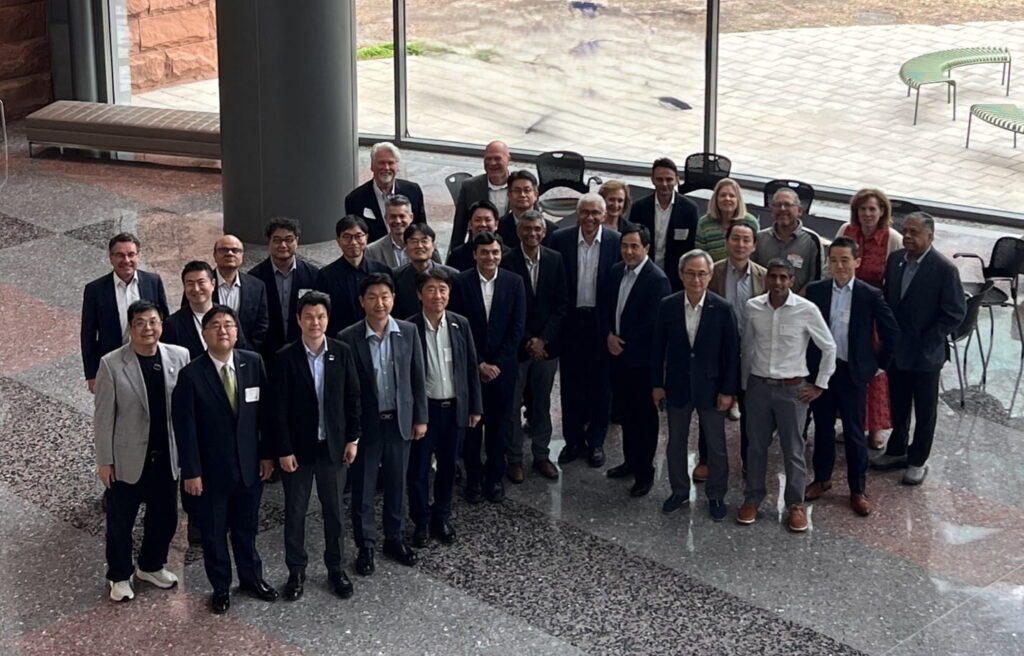
The Next G Alliance (NGA) recently hosted its first Trilateral Workshop in Dallas with the XG Mobile Forum (XGMF) (Japan) and 6G Forum (Korea), focused on “6G Day-1 and Beyond.” Discussion ranged from lessons learned in 5G to 6G Day-1 and beyond.
Innovations Advancing the 6G Future
The event covered 6G technologies based on advancements in areas such as Integrated Sensing and Communication (ISAC), Non-Terrestrial Networks (NTN), AI, and Digital Twin technologies. The participants also noted the importance of applications and services that will drive monetization across the future 6G ecosystem. The goal was to take 6G from vision to practice.
Implementation Considerations
To better understand the 6G value proposition, participants discussed the following implementation considerations:
-
- Developments in the Open Centralized Unit/ Distributed Unit (OCUDU) program could add ISAC capabilities to the O-RAN architecture.
-
- Terrestrial network and NTN integration, which will be part of 3GPP standards, was discussed. The pace of work in this area will depend on how LEO operators respond to direct-to-consumer (D2C) demand.
-
- Global 6G spectrum alignment is crucial to the success of 6G and spectrum sharing will be critical for 6G operations.
Enabling the 6G Service Economy
Across a series of presentations and discussions, NGA, XGMF, and 6G Forum emphasized the need to “lower the total cost of ownership (TCO)” of 6G, reinforcing the operator community’s concerns from the 2025 3GPP workshop on 6G. The overarching message stressed that industry, vendors and operators must continue evolving their existing 5G operations to prepare for the deployment of 6G rather than waiting for 6G Day-1.
Next Steps on Collaboration
Over the coming year, the three organizations agreed to jointly develop an AI-Native 6G white paper. They also explored ISAC evaluation frameworks and identified three regionally focused ISAC use cases for further consideration:
(1) 6G Forum: Aviation Bird Strike Prevention
(2) XGMF: ISAC in Industrial Automation
(3) NGA: ISAC for Automotive.
Lastly, each group presented views on “Beyond Day 1” topics, including themes such as the need for more harmonized spectrum, Agentic AI, Physical AI, NTN, and Digital Twins. These topics continue to be explored by each member of the group and will be reviewed at future meetings.
Conclusion: Global Insights into Creating the 6G Future – The Need for Global Collaboration
The first NGA–XGMF–6G Forum Trilateral Workshop made one point unmistakable: the value of 6G will be built incrementally on the foundation operators are deploying today.
By aligning on spectrum, architecture, and a shared AI-native vision, and by grounding that vision in concrete use cases across industries including ISAC for aviation, industrial automation, and automotive, Japan, Korea, and North America are moving the conversation from what 6G could be to what it will deliver. The goal is no longer purely technical innovation. It is commercial: lowering total cost of ownership, proving return on investment, and giving operators, vendors and enterprises a reason to invest before 6G Day-1 arrives. With this trilateral partnership, our three organizations are signaling our intention to address our shared goals.
About the Authors