
Technology Roadmap Working Group: Digital Twin Panel
- April 23, 2026
Amitava Ghosh (Nokia) NGA Technology Roadmap Working Group Chair; Giovanni Geraci (Nokia); Rajat Prakash (Qualcomm); Kaushik Chowdhury (UT Austin); Havish Koorapaty (Ericsson); Phillip Leithead (InterDigital)
The Digital Twin (DT) Panel, hosted by the ATIS Next G Alliance’s Technology Roadmap Working Group on March 25, 2026, brought together experts from industry and academia to discuss the future of Digital Twin in the 6G era. The panel included representatives from Ericsson, Qualcomm, InterDigital, Nokia, and the University of Texas at Austin and explored the strategic role of RAN digital twins in the evolution toward 6G networks.
Strategic Role of Digital Twins in 6G
Panelists broadly agreed that digital twins will become a critical development and experimentation environment for 6G. Because future networks will rely heavily on AI/ML-driven automation, operators and vendors will require environments where AI models can be trained, validated, and stress-tested without affecting operational networks. A RAN digital twin can replicate the behavior of the real network and enable large-scale experimentation that would not be feasible in live deployments.
Another key role highlighted was the ability of digital twins to generate synthetic data. Since collecting large volumes of real network data is expensive and often limited by operational constraints, digital twins can provide data for AI model training and validation, accelerating the development of intelligent RAN capabilities. The panel also recognized that digital twins may adopt different strategies to generate synthetic data, including use of ray tracing, full stack emulation, and generative AI, each of which has a different computational cost and will be driven by the downstream task that ingests the data.
Key Use Cases for RAN Digital Twins
Several compelling use cases were identified:
- Network Design, Planning, and Optimization
Digital twins can help operators simulate network rollout scenarios, optimize cell placement, and improve coverage and performance before physical deployment. - Operational Optimization
Once deployed, digital twins can support tasks such as interference management, handover optimization, beamforming adjustments, and energy efficiency improvements. - AI Training and Agent Development
Digital twins provide an environment where AI agents can be trained and evaluated safely, enabling more autonomous network management. - Integrated Sensing and Communication (ISAC)
ISAC, an emerging capability expected in 6G, may require new deployment strategies and network configurations. Digital twins can help evaluate technical feasibility and performance trade-offs before operators invest in infrastructure changes. - Spectrum Sharing and Coexistence
Future spectrum frameworks incorporating dynamic sharing approaches, such as CBRS-like models, may require complex coexistence evaluations. Digital twins could simulate spectrum-sharing scenarios and interference environments before real-world deployment. - Network Slicing and Service Optimization
Digital twins can assist in designing custom network slices and admission control strategies tailored to specific applications. - TN–NTN Integration
The integration of terrestrial networks with non-terrestrial networks (satellites) presents significant modeling complexity, including satellite mobility and dynamic channel conditions. Digital twins were highlighted as a powerful tool for validating these hybrid architectures. - Controlled Policy Experimentation
A facet of many of the use cases discussed is policy experimentation. As networks become more autonomous, operators will need to define guardrails and operational policies governing AI-driven decision-making. Digital twins allow these policies to be evaluated in a repeatable and controlled environment, ensuring that network behavior remains within acceptable limits before deployment.
From Simulation to “Living” Digital Twins
A major theme of the discussion was the distinction between traditional network simulations and true digital twins. Traditional simulations typically provide a static and one-directional evaluation of network performance. In contrast, a true digital twin could become a dynamic, real-time replica of the operational network, continuously ingesting real-world data and enabling closed-loop experimentation. Further, a true RAN digital twin requires both network and user equipment (UE) digital representations, enabling realistic modeling of traffic, mobility, radio behavior, and closed-loop AI-driven network optimization. Designing realistic digital twins and keeping such twins calibrated may need closed-loop participation from components of the network, including the UEs, base stations, and other external sensors.
This capability would allow operators to perform “what-if” experiments, such as testing scheduler changes, new AI algorithms, or parameter adjustments in the twin before implementing them in the real network. While panelists agreed that digital twins will expand the capabilities of network testing and optimization, there was also consensus that traditional simulation tools will likely continue to coexist with digital twins.
Impact on Standardization
The panel also discussed whether digital twins could influence future 6G standardization efforts in 3GPP. Today, many standardization studies rely on stochastic channel models to evaluate network performance. Digital twins, however, can provide site-specific and environment-specific models, potentially offering more realistic evaluations.
However, panelists noted that incorporating digital twin–based modeling into standards would require industry consensus on representative environments and modeling methodologies. While digital twins may eventually impact standardization, particularly in later releases, their immediate impact will likely be more prominent in network deployment, optimization, and operational experimentation.
Broader Opportunities and Challenges
Panelists also suggested that digital twins could provide prior knowledge of the network environment, for example through maps, propagation models, or AI representations of the environment. This information could enable simpler AI models, faster inference, and improved network performance.
Another observation was that digital twins may unlock new use cases that are not yet fully envisioned, particularly as networks become more programmable and AI-driven.
Despite the strong potential, several challenges remain:
- Developing accurate and scalable digital twin models, especially those that fuse multimodal sources of data going beyond radio and network time series KPIs
- Achieving industry consensus on representative environments
- Integrating outcomes from different digital twins that operate at varying timescales, resolutions, and model the same physical environment but from the viewpoint of different layers of the network stack
- Dimensioning the digital twins that model different parts of the network with varying scope and timescales appropriately to manage complexity of the digital twin, especially for twins operating with short timescales.
- Integrating digital twins with standardization frameworks
- Evaluating economic viability and business models that can support the use of digital twins for new use cases such as ISAC
Final Thoughts
The panel concluded that RAN digital twins are likely to become a key enabler for AI-native 6G networks, supporting network design, AI training, operational optimization, and experimentation. While Digital Twin technology is still evolving, its ability to create a realistic, controllable replica of the network environment could significantly accelerate innovation and reduce deployment risk in future wireless systems. The panelists speculated that by 2035, close to 100 percent of the pre-deployment network will be designed using digital twins and a significant portion of operational decisions will be based on Digital Twins.
- Category:Technology Roadmap
- Tags:
About the Authors
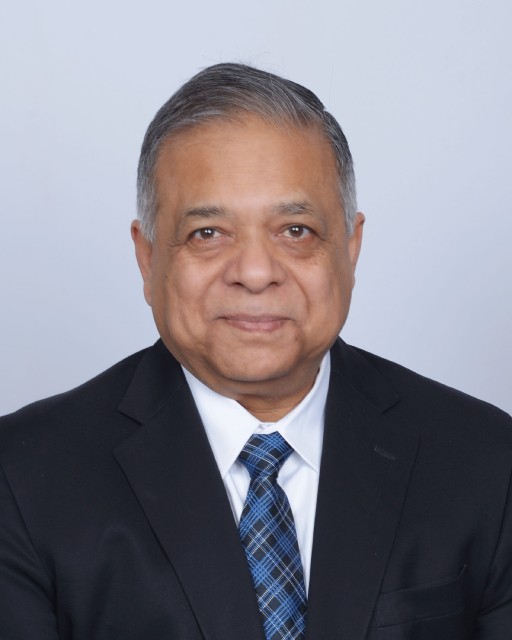
Amitava Ghosh
Chair at NGA Technology Roadmap Working Group
Amitabha (Amitava) Ghosh (F’15) is a Nokia Fellow and works at Nokia Standards and Strategy. He joined Motorola in 1990 after receiving his Ph.D in Electrical Engineering from Southern Methodist University, Dallas. Since joining Motorola he worked on multiple wireless technologies starting from IS-95, cdma-2000, 1xEV-DV/1XTREME, 1xEV-DO, UMTS, HSPA, 802.16e/WiMAX and 3GPP LTE. He has 60 issued patents, has written multiple book chapters and has authored numerous external and internal technical papers. He is currently working on 5G Evolution and 6G technologies. Recently, he was elected chair of the Next G Alliance (an US 6G initiative) National Roadmap Working Group. His research interests are in the area of digital communications, signal processing and wireless communications. He is the recipient of 2016 IEEE Stephen O. Rice and 2017 Neal Shephard prize, member of IEEE Access editorial board and co-author of the book titled "Essentials of LTE and LTE-A".

Giovanni Geraci
Research Team Leader – AI-RAN at Nokia
Giovanni Geraci is a Team Leader at Nokia Standards, leading a global team in AI-native wireless research and digital twins. He is also an Associate Professor at Universitat Pompeu Fabra, Spain. His work has been recognized with multiple IEEE earlycareer and best paper awards.
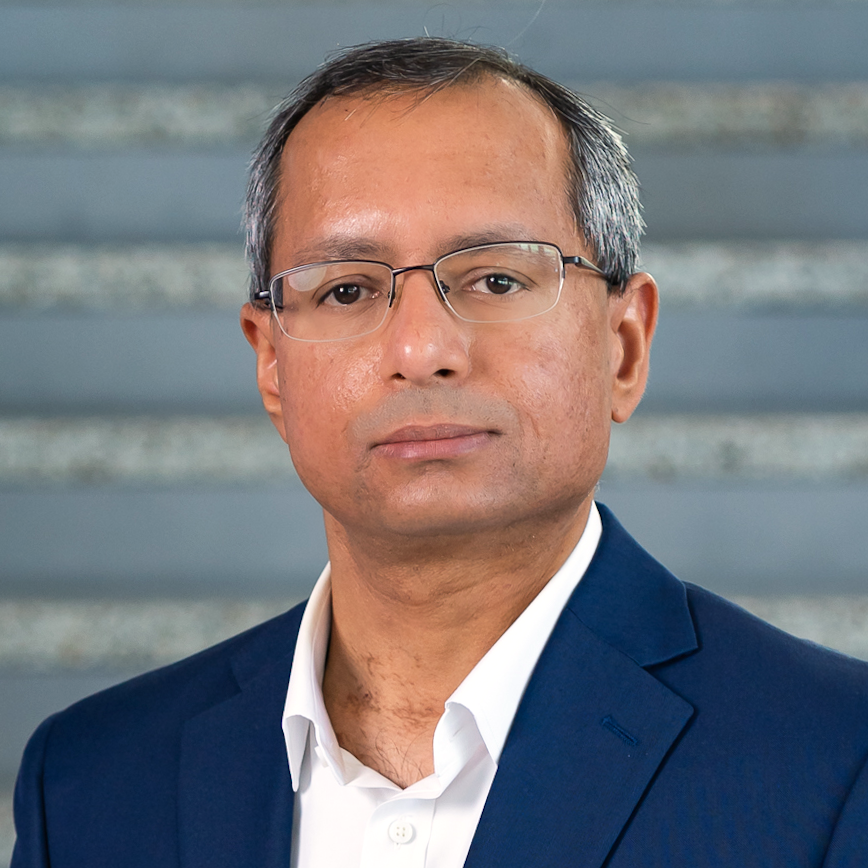
Rajat Prakash
Senior Director of Technology at Qualcomm
Rajat Prakash is with the Wireless R&D group at Qualcomm. His current work focuses on construction and applications of digital twins of wireless networks. He also works on Open RAN and industrial IoT for 5G. Rajat has previously worked on a wide range of topics in wireless networks, including small cells, self-organizing networks, neutral hosting, VoLTE and VoWiFi. He has participated in standards and industry bodies such as 3GPP, O-RAN Alliance, CBRS Alliance, Multefire Alliance, Small Cell Forum, 5G ACIA, IEEE and 3GPP2. Rajat obtained his PhD from the University of Illinois at Urbana-Champaign, MS from Cornell University and B.Tech from the Indian Institute of Technology, Kanpur, all in Electrical Engineering.

Kaushik Chowdhury
Professor, Electrical and Computer Engineering at University of Texas at Austin
Kaushik Chowdhury holds the Chandra Family Endowed Distinguished Professorship in Electrical and Computer Engineering #2 at The University of Texas at Austin, USA, where he is a member of the Wireless Networking and Communications Group (WNCG). He earned his M.S. from the University of Cincinnati and his Ph.D. from the Georgia Institute of Technology. Prior to joining UT Austin, he served for fifteen years as a professor at Northeastern University in Boston. His research spans applied machine learning for wireless systems, including deep learning for spectrum sensing and sharing, RF cybersecurity, multimodal sensor fusion and digital twins. He is a Fellow of the IEEE and ACM Distinguished Member. His work has been recognized with major honors, including being a finalist for the 2023 US Blavatnik National Awards for Young Scientists, the U.S. Presidential Early Career Award for Scientists and Engineers (PECASE), the DARPA Young Faculty Award, the ONR Director of Research Early Career Award, and the NSF CAREER Award.
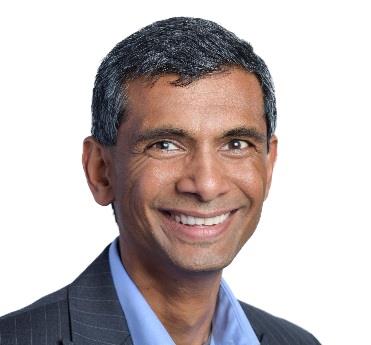
Havish Koorapaty
Vice President - Standards & Industry Initiatives, Americas at Ericsson
Havish Koorapaty has B.S., M.S., and Ph.D. degrees in Computer Engineering from North Carolina State University. He has almost 30 years of experience with Ericsson in wireless communications systems spanning 2G to 6G and over 250 technical papers and patents. He was the recipient of the Ericsson Inventor of the Year award in 2016. Havish has participated in standardization efforts in the 3GPP, ATIS, TIA, IEEE, ETSI and O-RAN standardization bodies. He was the recipient of the 3GPP Excellence Award in 2015. Havish served as a vice-chairman in 3GPP RAN1 and as a co-chair for the O-RAN next Generation Research Group (nGRG). He is currently Vice President for standards and industry initiatives in the Americas at Ericsson. He is also a co-chair of the Steering Group in the Next G Alliance as well as a co-chair of the ATIS Open RAN Committee.
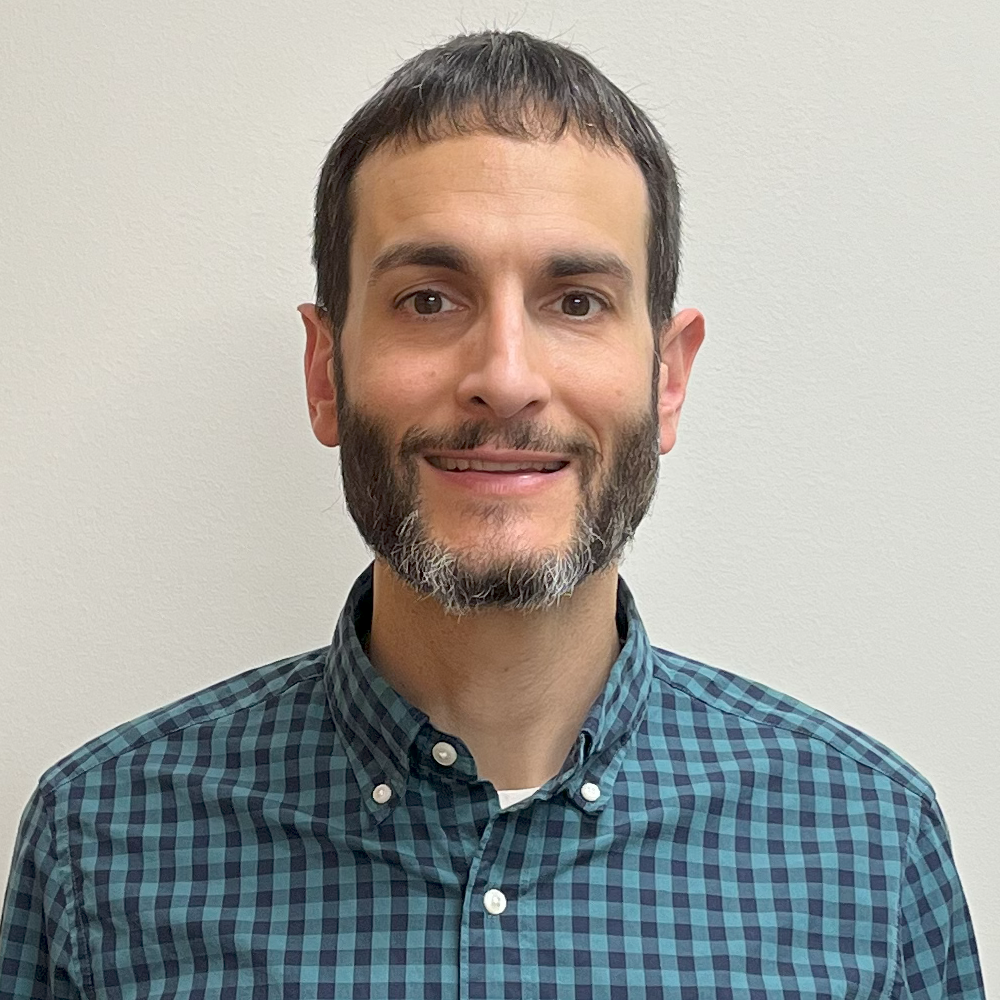
Phillip Leithead
Member Technical Staff, R&D at InterDigital
Phillip Leithead is a Senior Member of Technical Staff in InterDigital’s Wireless Research group, where he works on advanced wireless system design and next-generation communication technologies. With over 20 years of experience spanning the PHY layer, RF hardware, and end-to-end wireless systems from 3G through 6G, he brings a cross-layer perspective that connects fundamental research with practical system implementation. His current research interests include AI/ML for air interface and RF digital twins. He holds numerous patents and has authored multiple publications in wireless communications.
