
Technology Roadmap Working Group Hosts Extreme MIMO Panel
- March 3, 2026
Amitava Ghosh (Nokia) NGA Technology Roadmap Working Group Chair; Fred Vook (Nokia); Yeliz Tokgoz (Qualcomm); Robert Heath (UC San Diego); Mark Harrison (Ericsson); and Jyotish Robin (Interdigital)

ATIS’ Next G Alliance Technology Roadmap Working Group (TRWG) hosted a panel on January 7, 2026 to shape a realistic, forward-looking vision for extreme/massive MIMO in 6G, emphasizing that 6G extreme MIMO should represent a fundamental architectural evolution rather than a simple extension of 5G. Participants highlighted the need to balance ambition with deployability, grounding both research and standardization efforts in technical feasibility, spectrum realities, and economic constraints.
The evolution of massive and extreme MIMO was identified as a major enabler for 6G capacity and coverage, particularly in mid-band and upper-mid-band spectrum. While very large antenna arrays promise significant gains, participants raised concerns around channel modeling accuracy, calibration complexity, power consumption, cost, and site-level deployment constraints. The group emphasized the need for realistic assumptions when extrapolating performance gains, especially when reusing existing infrastructure.
Extreme MIMO and Propagation
Robert Heath provided an academic, theory-driven perspective on extreme MIMO and propagation, highlighting the limitations of existing channel models when extrapolated to very large arrays and emphasizing the need for measurement-based validation. He also described a new framework for MIMO communication that embraces reconfigurable antennas, which he calls the tri-hybrid MIMO architecture. Heath explained how this architecture may contribute towards low-power extreme MIMO in 6G, if ongoing research at the intersection of communication theory, electromagnetics and AI is successful.
Spectrum Strategy
Fred Vook focused on 6G spectrum strategy, emphasizing mid-band and upper-mid-band tradeoffs, coexistence and regulatory realism, and noting that spectrum availability, rather than theory, will ultimately constrain 6G performance. Spectrum strategy emerged as a critical and potentially limiting factor for 6G. Discussions covered mid-band, upper-mid-band, and sub-THz frequencies, with broad agreement that no single band will suffice. Higher frequencies offer bandwidth, but face challenges related to propagation, coverage, energy efficiency, densification issues and coexistence with incumbents. Regulatory alignment, global harmonization, and credible coexistence studies were viewed as essential prerequisites for successful 6G deployment. Additional discussions focused on the numerous features and options supported by 5G and how those features can be streamlined and improved as we move into 6G. Also discussed was how AI/ML techniques are expected to be incorporated into 6G MIMO standardization, along with the associated challenges; the current standards status; and how such techniques are expected to compare against existing classical methodologies.
Yeliz Tokgoz noted that while higher frequencies introduce certain challenges, advances in device and infrastructure capabilities enable upper‑mid‑band deployments to be co‑sited with existing mid‑band sites, paving the way for fast and cost‑effective 6G extreme‑MIMO rollouts. She emphasized that transmit‑power enhancements and beamforming gains are critical to improving both downlink and Uplink (UL) coverage and capacity.
Lessons Learned from 5G Massive MIMO
Mark Harrison spoke of some lessons learned from 5G massive MIMO and a few opportunities for 6G MIMO enhancements. We’ve learned how to make MIMO work better in practice by understanding implementation limitations in both User Equipment (UE) and base stations, e.g., in terms of Radio Frequency (RF) hardware and channel state information that degrade MIMO performance. Opportunities for 6G include MIMO techniques that better match the bursty traffic that is observed in networks, Channel State Information (CSI) enhancements, and uplink MIMO schemes taking into account UE Power Amplifier (PA) limitations like multi-layer Discrete Fourier Transform-spread-Orthogonal Frequency Division Multiplexing (DFT-s-OFDM).
ATIS’ Next G Alliance: The Role of Standardization
From a standardization perspective, Next G Alliance was seen as a valuable forum to align industry, academia, and regulatory stakeholders early in the 6G lifecycle. Participants cautioned against premature over-standardization that could stifle innovation, while recognizing the need for early guidance on architectures, spectrum assumptions, and AI enablers. Cross-industry collaboration, including vertical sectors, was viewed as increasingly important.
Near-Field MIMO
Finally, Jyotish Robin discussed the potential of near-field MIMO, which introduces distance domain as an additional dimension for radio resource management (alongside traditional dimensions such as time, frequency, spatial domain, polarization, etc.) in mid-band and upper mid-band spectrum. He highlighted key operational aspects required to support the simultaneous coexistence of near field and far field users within the same cell. Some panelists indicated that this area needs to be further researched. The panelists were asked what kind of spectrum efficiency gain 6G Extreme MIMO will offer over 5G Massive MIMO. The consensus was 2-3x improvement in spectrum efficiency.
Overall, the discussion was pragmatic and evidence-driven, focusing on credible paths from research to deployment. The panel did not aim to make decisions, but rather to frame key challenges, identify research gaps, and guide future NGA contributions to the global 6G Extreme MIMO dialogue.
Key Takeaways from the Extreme MIMO Panel Discussion
- The evolution of massive and extreme MIMO was identified as a major enabler for 6G capacity and coverage, particularly in mid-band and upper-mid-band spectrum.
- Advances in device and infrastructure capabilities enable upper‑mid‑band deployments to be co‑sited with existing mid‑band sites.
- Higher frequencies offer bandwidth, but face challenges related to propagation, coverage, energy efficiency, densification issues and coexistence with incumbents.
- AI/ML techniques for extreme MIMO should be compared against existing classical methodologies (suitably optimized) and should provide reasonable improvements in terms of various Key Performance Indicators (KPIs).
- UL coverage and capacity enhancements should be one of the key 6G Day 1 features.
- 6G should include MIMO techniques that better match the bursty traffic that is observed in networks and better reflect implementation limits of UEs and base stations.
- Advanced techniques like reconfigurable antenna architectures, tri-hybrid MIMO, and near field MIMO should be investigated further.
Learn more about the work of the NGA Technology Roadmap Working Group, which is developing and maintaining a lifecycle roadmap for 6G that extends from research to market readiness.
- Category:Technology
- Tags:
About the Authors
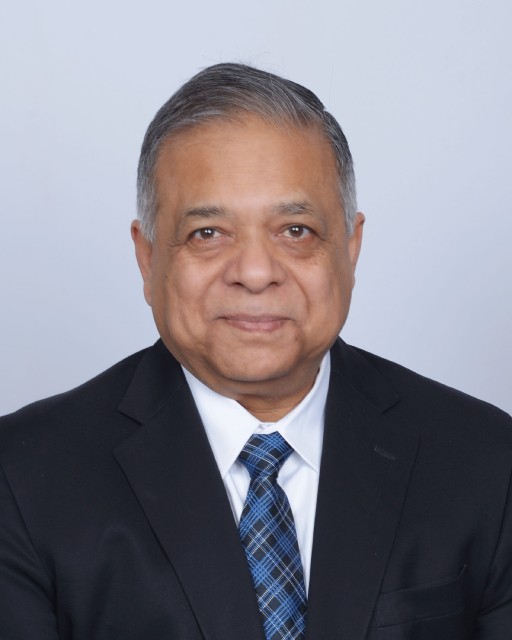
Amitava Ghosh
Chair at NGA Technology Roadmap Working Group
Amitabha (Amitava) Ghosh (F’15) is a Nokia Fellow and works at Nokia Standards and Strategy. He joined Motorola in 1990 after receiving his Ph.D in Electrical Engineering from Southern Methodist University, Dallas. Since joining Motorola he worked on multiple wireless technologies starting from IS-95, cdma-2000, 1xEV-DV/1XTREME, 1xEV-DO, UMTS, HSPA, 802.16e/WiMAX and 3GPP LTE. He has 60 issued patents, has written multiple book chapters and has authored numerous external and internal technical papers. He is currently working on 5G Evolution and 6G technologies. Recently, he was elected chair of the Next G Alliance (an US 6G initiative) National Roadmap Working Group. His research interests are in the area of digital communications, signal processing and wireless communications. He is the recipient of 2016 IEEE Stephen O. Rice and 2017 Neal Shephard prize, member of IEEE Access editorial board and co-author of the book titled "Essentials of LTE and LTE-A".

Fred Vook
Nokia
Frederick W. Vook (SM’04) is a Distinguished Member of the Technical Staff in the Radio Interface group of Nokia Standards in Naperville IL. He currently manages a research and standardization project on MIMO and Beamforming for 3GPP including 5G and 6G. Fred has extensive experience in antenna array technologies, air interface design, algorithm development, propagation modeling, and link- and system- level performance modeling for wireless systems. Prior to joining Nokia in 2011, he was with Motorola for 19 years where he worked on various topics including MIMO and beamforming solutions for the IEEE 802.16/WiMax and LTE standards, wireless LAN system design, and propagation measurements at 19GHz and 2.4GHz. Fred received his Ph.D. in Electrical Engineering at The Ohio State University in 1992.

Yeliz Tokgoz
Principal Engineer, Wireless R&D at Qualcomm
Dr. Yeliz Tokgoz is a Principal Engineer in the Wireless R&D division at Qualcomm Technologies, Inc. She joined Qualcomm Technologies in 2004 and worked on multiple projects involving wireless communication systems such as CDMA EV-DO, 4G LTE, 5G NR and 6G. She has been involved in design, evaluation, prototyping and commercialization of various systems solutions including voice over packet data networks, self-organizing networks, massive MIMO antenna systems and high-reliability low-latency services. She is currently a systems engineering lead focusing on design and prototyping to enable upper mid-band spectrum for 6G devices and services. She holds over 100 U.S. Patents. She received her M.S. in Electrical Engineering from Ohio State University and her Ph.D. in Electrical Engineering from UC San Diego.
Robert Heath
UC San Diego
Robert W. Heath Jr. (S'96 - M'01 - SM'06 - F’11) is the Charles Lee Powell Chair in Wireless Communications in the Department of Electrical and Computer Engineering at the University of California, San Diego. He is also President and CEO of MIMO Wireless Inc. From 2020-2023 he was the Lampe Distinguished Professor at North Carolina State University and co-founder of 6GNC. From 2002-2020 he was with The University of Texas at Austin, most recently as Cockrell Family Regents Chair in Engineering and Director of UT SAVES. He authored ``Introduction to Wireless Digital Communication'' (Prentice Hall, 2017) and ``Digital Wireless Communication: Physical Layer Exploration Lab Using the NI USRP'' (National Technology and Science Press, 2012), and co-authored ``Millimeter Wave Wireless Communications'' (Prentice Hall, 2014) and ``Foundations of MIMO Communication'' (Cambridge University Press, 2018). Dr. Heath has been a co-author of a number award winning conference and journal papers including recently the 2017 Marconi Prize Paper Award, the 2019 IEEE Communications Society Stephen O. Rice Prize, the 2020 IEEE Signal Processing Society Donald G. Fink Overview Paper Award, the 2021 IEEE Vehicular Technology Society Neal Shepherd Memorial Best Propagation Paper Award, and the 2022 IEEE Vehicular Technology Society Best Vehicular Electronics Paper Award. Other notable awards include the 2017 EURASIP Technical Achievement award, the 2019 IEEE Kiyo Tomiyasu Award, the 2021 IEEE Vehicular Technology Society James Evans Avant Garde Award, and the 2025 IEEE/RSE James Clerk Maxwell Medal. In 2017, he was selected as a Fellow of the National Academy of Inventors. In 2024, he was selected as a Fellow of the American Association for the Advancement of Science. He was a member-at-large on the IEEE Communications Society Board-of-Governors (2020-2022) and the IEEE Signal Processing Society Board-of-Governors (2016-2018). He was Editor-in-Chief of IEEE Signal Processing Magazine from 2018-2020. He is also a licensed Amateur Radio Operator, a Private Pilot, a registered Professional Engineer in Texas. He is an elected member of the National Academy of Engineers.

Mark Harrison
Standards Researcher at Ericsson
Mark is a standards researcher for Ericsson. He’s researched and developed multi-antenna techniques since their inception in digital cellular communications, working in Motorola, BlackBerry, and Ericsson. He has served as a delegate in standards including TR45.5/3GPP2 and 3GPP and watched as MIMO evolved from a research curiosity to a core feature of air interfaces and network architectures. He holds a bachelor's degree from Rensselaer Polytechnic University and a Master’s degree from Southern Methodist University.
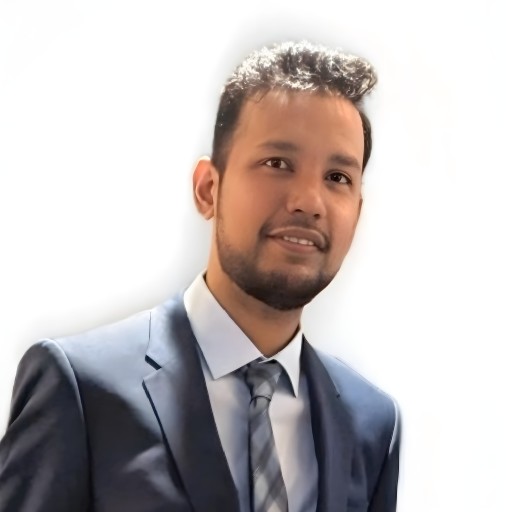
Jyotish Robin
Senior Engineer, Wireless Research at InterDigital
Jyotish Robin is a Senior Engineer in Wireless Research at InterDigital, where he focuses on technology development for 5G-Advanced and emerging 6G systems, with an emphasis on advanced physical-layer design and system-level innovation. His work spans 3GPP RAN1 standardization efforts, advanced massive MIMO research & channel modeling, and developing novel PHY architectures for next-generation wireless networks. Jyotish recently contributed towards Rel-19 near-field channel modeling efforts initiated by 3GPP and is actively involved in early 6G studies on joint modulation and coding. He is an inventor on multiple U.S. patent filings related to massive MIMO and advanced PHY techniques. Jyotish received his Ph.D. from NYU Wireless, where his research focused on massive random access and multiuser detection.
